banner
Home

Blog

Blog

  • The Complete Guide to Cell Culture Media: From Basics to Advanced Optimization
    The Complete Guide to Cell Culture Media: From Basics to Advanced Optimization Apr 13, 2025
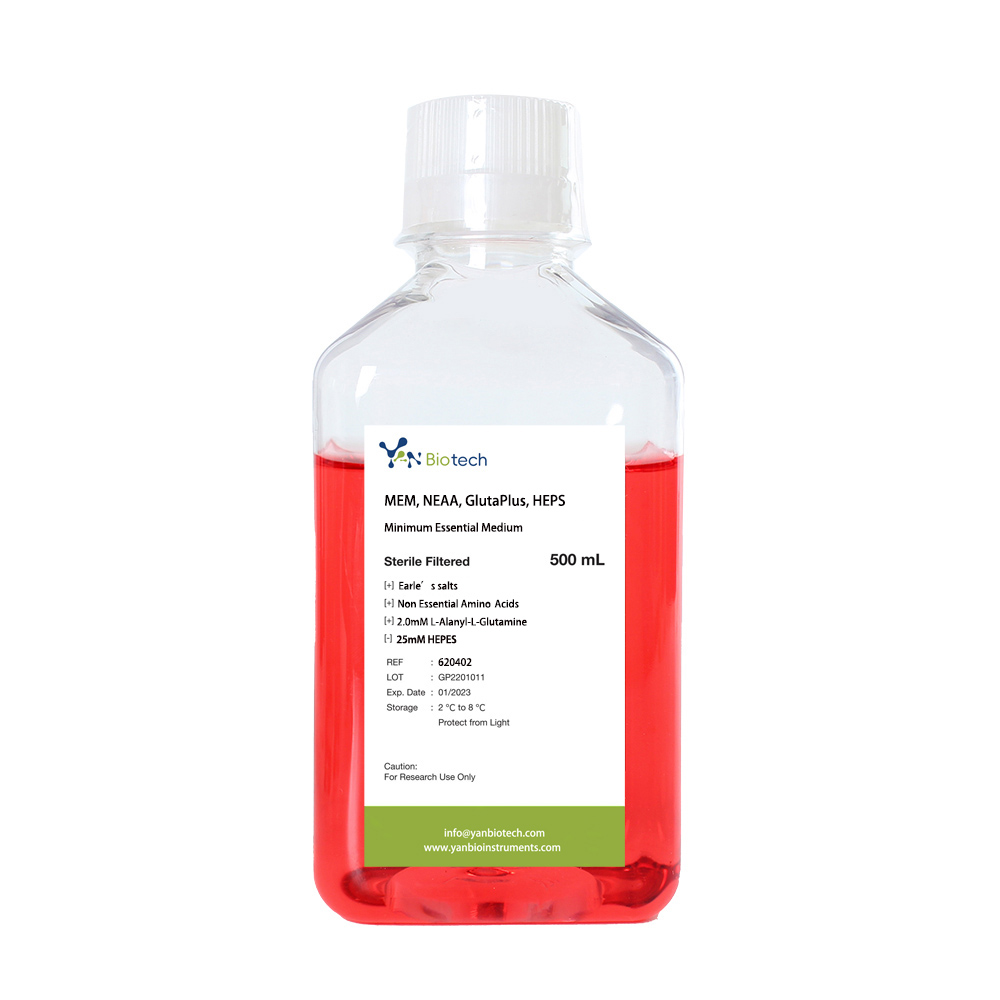
      Cell culture is a cornerstone of biomedical research, drug development, and biomanufacturing—and cell culture media is the lifeline that determines cell health, proliferation, and functionality. At Yanbiotech, we provide researchers with a complete portfolio of high-quality cell culture solutions, including our flagship 9 core basal media formulations that cover virtually all mammalian cell culture needs. 1. Yanbiotech's 9 Core Basal Media Formulations Manufactured under strict ISO-certified conditions: Media  Key Features Typical Applications DMEM High/low glucose options HEK293, HeLa, fibroblasts MEM Eagle's basic formulation Adherent cell lines α-MEM With nucleosides Stem cells, osteoblasts RPMI 1640 Optimized for suspension Lymphocytes, hybridomas IMDM Rich nutrient profile Hematopoietic cells Ham's F-12 Complex nutrient mixture CHO cells, hepatocytes DMEM/F12 1:1 mixture Stem cells, 3D cultures McCoy's 5A Primary culture optimized Epithelial cells, biopsies M199 Contains multiple growth factors Endothelial cells   2.Technical Advantages Cell-Specific Optimization Guides available for all 9 media types Endotoxin-controlled: <0.1 EU/mL for sensitive applications Performance-matched to leading international standards Featured Product: 620405 (Nucleoside-supplemented α-MEM) Specifically formulated for mesenchymal stem cell expansion 3. Specialized Applications Advanced Research Solutions ✔ Organoid Media Kits (Matched matrix/media systems) ✔ CRISPR-Edited Cell Line Media (With optimized recovery supplements) ✔ Bioreactor-Grade Formulations (For scale-up studies) 4. Ordering & Support First-time user offer: Free technical consultation with purchase Contact our cell culture specialists: ? Email: info@yanbioinstruments.com ? Website: www.yanbioinstruments.com Follow the conversation: #CellCulture #Yanbiotech #ResearchSolutions #BiotechInnovation #LifeScience (Products for research use only. CE certified where applicable.)        
  • A Step-by-Step Guide to Cell Culture Experiments: From Preparation to Analysis Mar 17, 2025
    Cell culture experiments are a cornerstone of life science research, playing a vital role in drug screening, gene function studies, and disease mechanism exploration. To ensure accuracy and reproducibility, following a standardized experimental protocol is essential. This article provides a detailed guide to the basic steps of cell culture experiments, helping you achieve reliable results efficiently. 1. Pre-Experiment Preparation   1.1 Experimental DesignBefore starting, clearly define the objectives of your experiment and design a robust experimental plan. This includes determining experimental and control groups, selecting appropriate cell lines, and setting time points for data collection.1.2 Reagent and Instrument Preparation Cell Culture Medium: Choose a suitable medium (e.g., DMEM, RPMI-1640) based on the cell type, and supplement it with necessary serum and antibiotics. Trypsin: Used for cell detachment. PBS Buffer: For washing cells. Instruments: CO2 incubator, biosafety cabinet, centrifuge, inverted microscope, etc. 2. Cell Thawing and Culturing2.1 Cell Thawing Retrieve frozen cells from the liquid nitrogen tank and quickly thaw them in a 37°C water bath.   Transfer the cell suspension to a centrifuge tube containing pre-warmed medium, centrifuge, discard the supernatant, and resuspend the cells in fresh medium before seeding them into a culture flask. 2.2 Cell Passaging When cells reach 80%-90% confluency, remove the old medium and wash the cells with PBS. Add an appropriate amount of trypsin to detach the cells. Once cells round up, add medium to neutralize the trypsin. Centrifuge, discard the supernatant, and resuspend the cells in fresh medium for subculturing.   3. Experimental Treatment 3.1 Cell Seeding Seed cells into multi-well plates or culture dishes according to experimental needs, ensuring even cell distribution. Place the cells in a CO2 incubator and allow them to adhere and reach the desired density. 3.2 Drug Treatment or Transfection Drug Treatment: Add different concentrations of drugs to the cells based on the experimental design, including control and treatment groups. Cell Transfection: Introduce plasmids or siRNA into cells using lipofection or electroporation. 4. Cell Detection and Analysis 4.1 Cell Proliferation Assay Use CCK-8 or MTT assays to measure cell proliferation, and determine absorbance values using a microplate reader. 4.2 Apoptosis Detection Detect apoptosis rates using Annexin V/PI staining combined with flow cytometry. 4.3 Protein or Gene Expression Analysis   Extract total protein or RNA from cells and analyze target protein or gene expression levels via Western Blot or qPCR. 5. Data Organization and Analysis Organize experimental data and perform statistical analysis using software like GraphPad Prism. Create graphs and charts, and compile an experimental report summarizing the results and discussing their scientific significance. 6. Key Considerations Maintain strict aseptic techniques to avoid contamination. Regularly monitor cell health and growth conditions. By following this standardized cell culture protocol, you can efficiently complete experiments and obtain reliable data. Whether for basic research or drug development, meticulous experimental practices are key to success. If you need high-quality cell culture reagents or instruments, feel free to contact yanbiotech. We offer professional products and technical support to help you achieve your research goals! Document all experimental steps and conditions in detail to ensure reproducibility.  

  • How to Choose the Right Tissue Homogenizer for Different Laboratory Applications? Mar 09, 2025
    Selecting the ideal tissue homogenizer is critical for achieving consistent and reliable results across diverse laboratory workflows. Whether you’re preparing samples for a PCR experiment, optimizing protein extraction for a WB experiment, or processing complex biological tissues, the right homogenizer can significantly impact efficiency and data quality. Here’s a guide to help you make an informed decision. 1. Understand Your Sample Type and ThroughputThe first step in choosing a tissue homogenizer is evaluating your sample characteristics. Fragile tissues (e.g., plant leaves or cell cultures) may require gentle bead-based homogenization to preserve RNA integrity for sensitive PCR experiments. Conversely, tough fibrous tissues (e.g., muscle or tumors) might need high-shear rotor-stator systems for complete disruption. Additionally, consider throughput: high-volume labs often benefit from automated homogenizers, while smaller labs may prefer compact, manual models. 2. Match Homogenization Methods to Your Application(1) PCR Experiment: For nucleic acid isolation, prioritize homogenizers that minimize cross-contamination and heat generation. Bead mill systems or ultrasonic homogenizers are ideal for lysing cells without degrading DNA/RNA. (2) WB Experiment: Protein extraction demands efficient tissue disruption while maintaining protein stability. Mechanical homogenizers with adjustable speeds ensure optimal lysis buffer interaction, preserving epitopes for accurate Western blot results.(3) Multi-Application Labs: Versatile homogenizers with interchangeable accessories (e.g., blades, tubes) adapt to varying needs, from grinding tissues to emulsifying lysates. 3. Prioritize Reproducibility and Ease of UseConsistency is key in experiments like PCR and WB, where slight variations in sample prep can skew outcomes. Look for homogenizers with programmable settings, timers, and speed controls to standardize protocols. Ergonomic designs and easy-to-clean components also reduce user error and downtime—critical for busy labs processing dozens of samples daily. 4. Yanbiotech Tissue Homogenizers: Precision Meets Excellence When reliability matters, Yanbiotech tissue homogenizers stand out. Engineered for versatility, our homogenizers deliver unmatched performance across applications, from delicate PCR experiment prep to robust protein extraction for WB experiments. Key advantages include: (1) Advanced Technology:Patented cooling systems prevent heat-induced biomolecule degradation. (2) Customizable Configurations: Tailor your setup with specialized blades, tubes, or bead kits. (3) Unparalleled Support: Yanbiotech’s 24/7 technical team ensures seamless integration and troubleshooting, while our extended warranties guarantee long-term value. Choosing the right tissue homogenizer isn't just about equipment—it’s about investing in your lab’s future. With Yanbiotech, you gain more than a tool; you secure a partner committed to advancing your research through innovation, precision, and unwavering support. Explore our range today and elevate your PCR and WB experiments to new heights of accuracy.
1 2
A total of2pages
Contact Us
Address : No. 29, Daxueyuan Road, Guandong Street, Donghu New Technology Development Zone, Wuhan City, Hubei Province, China
Newsletter
Please read on, stay posted, subscribe, and we welcome you to tell us what you think.
Submit

Copyright @ Wuhan Yanbiotech Co., Ltd. All Rights Reserved. Network Supported Xml / Privacy Policy

Leave A Message

Leave A Message
If you are interested in our products and want to know more details,please leave a message here,we will reply you as soon as we can.
Submit

Home

Products

whatsApp

contact