BCA Protein Concentration Determination Kit
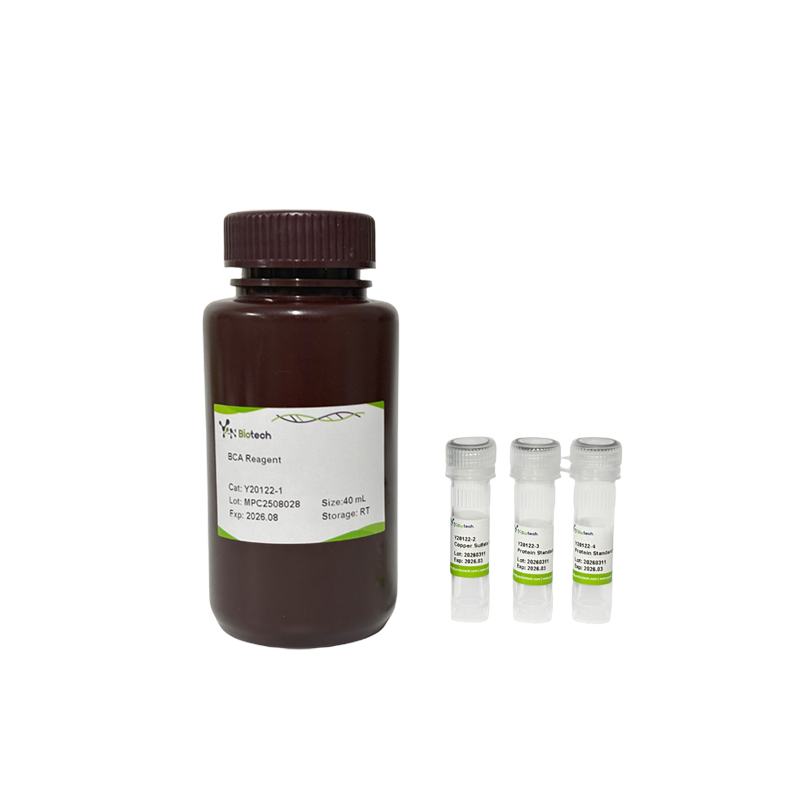

Designed for the quantitation of protein in samples within the concentration range of 50–2000 µg/mL
Cat. No. :
Y20122-200TBrand :
YanbiotechProduct Origin :
ChinaVolume :
200TProduct Information:
| Component Number | Component | Y20122-200T |
| Y20122-1 | BCA Reagent | 40 mL |
| Y20122-2 | Copper Sulfate Solution | 1.3 mL |
| Y20122-3 | Protein Standard (BSA) | 25 mg |
| Y20122-4 | Protein Standard Preparation Solution | 1.5 mL |
Currently, the two most commonly used methods for protein concentration quantification are the Bradford method and the BCA method. The fundamental principle of the BCA method for protein quantification is based on the biuret reaction. Under alkaline conditions, Cu²⁺ is reduced to Cu⁺ by proteins. Subsequently, Cu⁺ chelates with BCA (Bicinchoninic Acid, a colorimetric agent). Each two molecules of BCA chelate one Cu⁺, forming a purple, water-soluble complex. This complex has a maximum absorbance at 562 nm, and the color intensity is proportional to the protein concentration within a certain range. Therefore, it can be used for protein quantification, showing a good linear relationship within the protein concentration range of 50-2000 μg/mL.
This method is largely unaffected by chemicals present in most samples and is compatible with high concentrations of detergents in samples, including up to 5% SDS, 5% Triton X-100, and 5% Tween-20, 60, 80. However, chelating agents and high concentrations of reducing agents can affect the assay results. Ensure that the sample contains no EGTA, EDTA concentration is below 10 mM, DTT is below 1 mM, and β-mercaptoethanol is below 1 mM. If the sample contains chelating agents or reducing agents, consider using our company's alternative product, G2001 Bradford Protein Assay Kit.
Storage Conditions:
The entire kit can be transported at room temperature. Store the protein standard (BSA) at 2-8°C; valid for 12 months. Once prepared as a protein standard solution, store at -20°C and use within 6 months. Store the remaining reagents at room temperature; valid for 12 months.
Instructions for Use:
1. Prepare Protein Standard Stock Solution: Add 1 mL of Protein Standard Preparation Solution to the vial containing the Protein Standard (BSA). Completely dissolve the 25 mg of protein standard to obtain a Protein Standard Stock Solution at a concentration of 25 mg/mL. The prepared protein standard solution can be stored long-term at -20°C.
2. Prepare Protein Standard Working Solution: Take an appropriate amount of the 25 mg/mL Protein Standard Stock Solution and dilute it 50-fold with PBS or normal saline (it is recommended to use the same buffer as the samples to be tested) to obtain a Protein Standard Working Solution with a final concentration of 0.5 mg/mL. Note: Use a 10-fold serial dilution method to ensure accuracy.
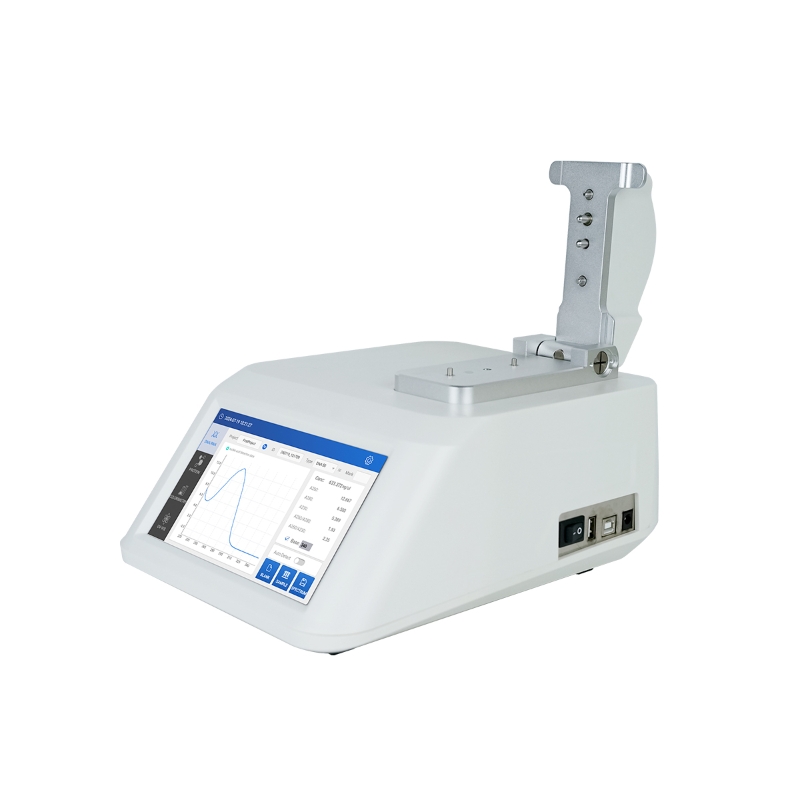
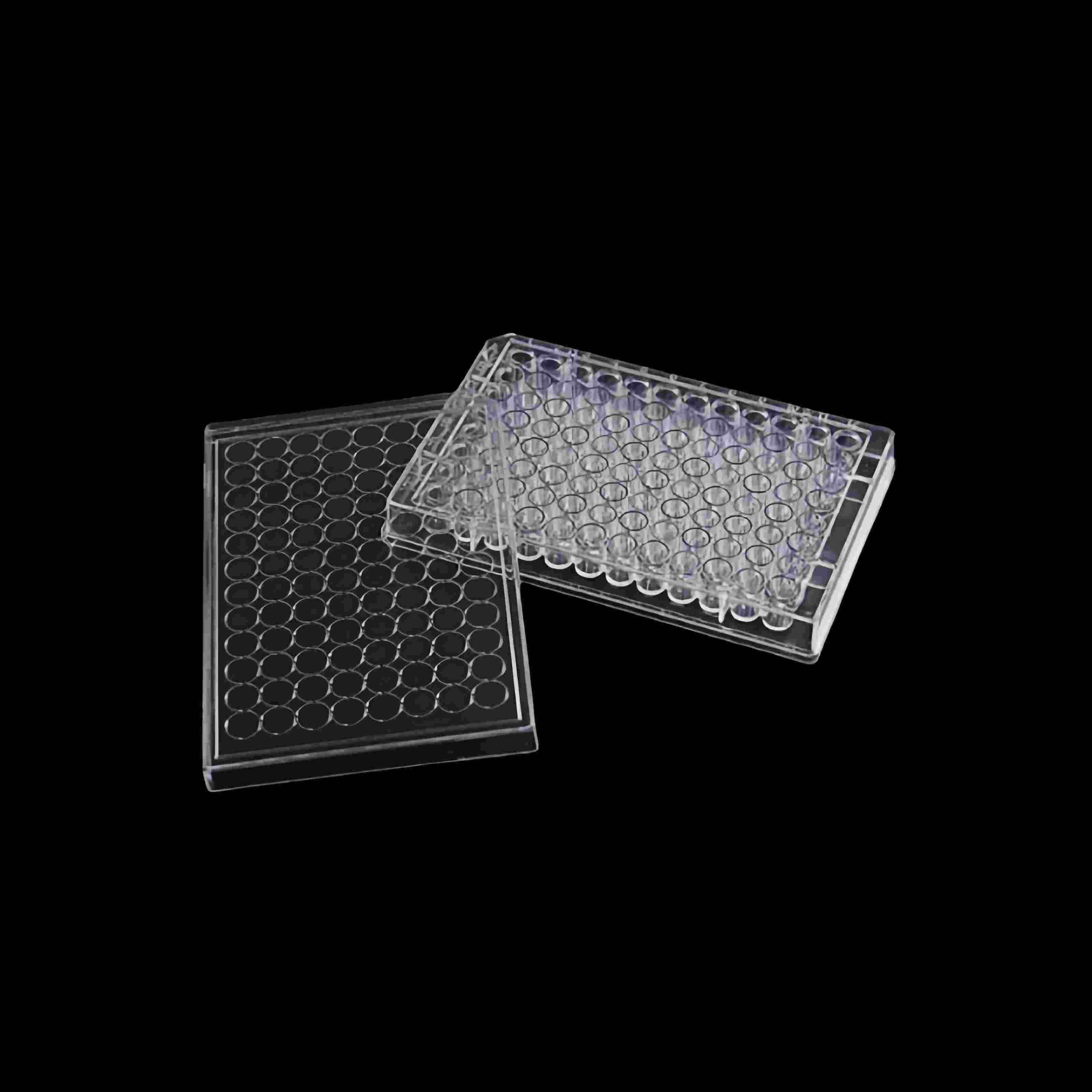
3. Generate Standard Curve (Microplate Reader Method): Add the Protein Standard Working Solution to a 96-well plate in volumes of 0, 1, 2, 4, 8, 12, 16, and 20 μL, respectively. Then, add PBS or normal saline to bring the total volume in each well to 20 μL, adding 20, 19, 18, 16, 12, 8, 4, and 0 μL respectively. This yields a standard curve with protein concentrations of 0, 25, 50, 100, 200, 300, 400, and 500 μg/mL.
4. Prepare Samples for Testing: Appropriately dilute the protein samples to be tested (a preliminary experiment can be performed to ensure the sample protein concentration falls within the standard curve range for reliable results). Add 20 μL of each diluted sample to wells of the 96-well plate. Dilute the test samples using the same solution as the protein standard.
5. Prepare BCA Working Reagent: Thoroughly mix the BCA Reagent and Copper Sulfate Solution at a 50:1 volume ratio to obtain the BCA Working Reagent. The BCA Working Reagent can be stored at room temperature and used within 24 hours. Each sample requires 200 μL. It is recommended to prepare only the amount needed to avoid waste.
6. Assay: Add 200 μL of BCA Working Reagent to each well containing the standard curve samples and the test samples. Mix thoroughly (the 96-well plate can be shaken on an oscillator for 30 seconds). Incubate at 37°C for 30 minutes. Then, using the 0 μg/mL standard as a blank, measure the absorbance at 562 nm. Record the absorbance values for each well. (Note: Incubation can also be done at room temperature for 2 hours, or at 60°C for 30 minutes. If the protein concentration is expected to be low, incubation at 60°C is recommended.)
7. Calculation: Generate a standard curve by plotting the protein concentrations (μg/mL) of the standards on the x-axis against their corresponding absorbance values on the y-axis. Based on the absorbance value of a test sample, determine its corresponding protein concentration (μg/mL) from the standard curve. Multiply this value by the sample dilution factor to obtain the actual protein concentration of the original test sample.
Notice:
1. Protein concentration determination by the BCA method is significantly affected by temperature and time. Absorbance values may change with prolonged incubation or increased temperature. If the incubation time and temperature cannot be precisely controlled, it is recommended to generate a standard curve for each assay.
2. When preparing the Protein Standard Stock Solution, ensure complete dissolution. When diluting to prepare the Protein Standard Working Solution, a 10-fold serial dilution is recommended. Do not dilute 50-fold in one step to avoid significant errors.
3. For accurate protein quantification, it is best to use the same buffer for sample extraction and for diluting the protein standard to ensure consistent assay conditions. If the buffer itself has a high background reading, consider using an alternative assay method.
4. If crystallization or precipitation occurs in the BCA Reagent at low temperatures, warm it in a 37°C water bath to dissolve. This does not affect its use.
5. Please wear laboratory clothes and disposable gloves during operation.
Stay Connected With Us



Copyright @ Wuhan Yanbiotech Co., Ltd. All Rights Reserved.
 Network Supported Xml / Privacy Policy
 English
 English
 Русский
 Español